Vacuuming With Pets: Separate Them or Keep Them Near?
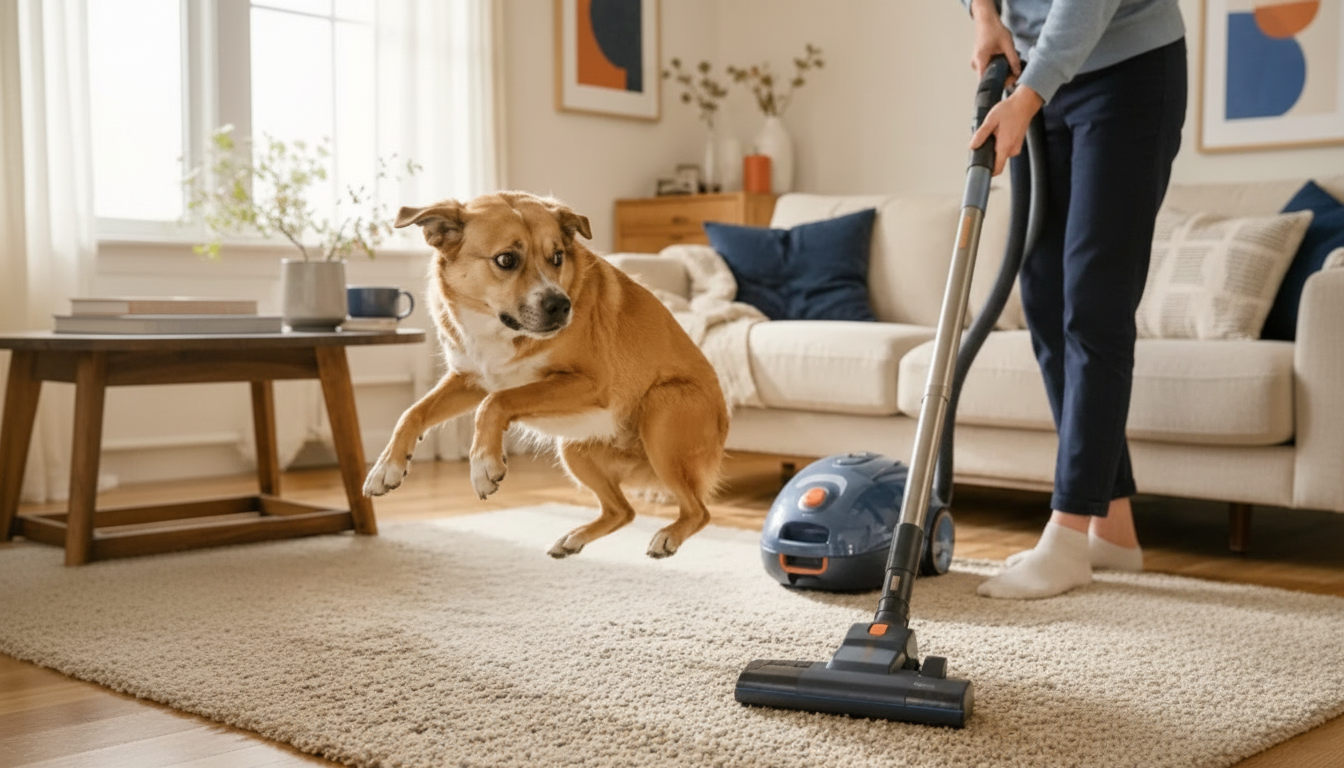
Should I vacuum while my pet is in the room or keep them separated?
In most homes, it’s safer and less stressful to keep pets separated while you vacuum. Many animals find vacuums loud, unpredictable, and scary, which can trigger fleeing, hiding, barking, swatting, or even defensive biting. Separation also reduces the chance of tails, paws, or curious noses getting too close to moving parts, cords, or attachments.
What’s the best choice for my pet and my home?
If your pet is anxious, reactive, elderly, very young, or prone to chasing the vacuum, separate them in another room with the door closed. Add a familiar bed, water, and a chew or puzzle toy to help them settle. For pets that are calm and have a history of ignoring appliances, vacuuming in the same room can be fine, as long as they have a clear escape route and you avoid cornering them.
When separation is strongly recommended
Keep them apart if your pet trembles, pants, tries to bolt, guards areas, or has ever lunged at the vacuum. It’s also a smart move if you’ll be moving furniture, vacuuming stairs, or using a high-powered upright with strong suction and a long cord.
If you choose to vacuum with your pet nearby
Start at a distance, keep the vacuum path predictable, and don’t vacuum toward your pet. Use steady, slower passes, avoid sudden direction changes, and pause if your pet shows signs of stress (ears pinned back, wide eyes, tail tucked, pacing, or vocalizing). For cats, ensure they have vertical space or a separate safe room to retreat to.
For more tips on managing noise, pet stress signals, and practical safety steps, visit the full guide: https://vibrantwaresoutlet.shop/should-i-vacuum-while-my-pet-is-in-the-room-or-keep-them-separated/.
FAQ
How can I help my pet get used to the vacuum over time?
Pair the vacuum with positive experiences in short sessions: let your pet see it turned off, reward calm behavior, then gradually introduce brief, distant vacuum noise. Move slowly at your pet’s pace and end sessions before they get overwhelmed.










Leave a comment